

Introduction. Every adventurer in World of Warcraft remembers their first glimpse of Azeroth—the sunlit fields of Elwynn Forest, the red dust of Durotar, or the shimmering crystals of Outland. These zones don’t just serve as backdrops; they are storytellers in their own right. Through color, architecture, lighting, and atmosphere, Blizzard’s artists have mastered the art of visual storytelling, turning geography into narrative and emotion into landscape.
This article explores how Blizzard uses zone design to convey lore, mood, and theme—proving that sometimes, the world speaks louder than dialogue ever could.
Visual Language as Storytelling
Blizzard’s zone design is guided by the principle that every environment should tell a story at first glance. From the crumbling ruins of Desolace to the neon luminescence of Zereth Mortis, visual cues set expectations before a single quest begins. The barren wastelands of Silithus scream desolation and decay, while the emerald vibrance of Val’sharah whispers of renewal and spiritual connection.
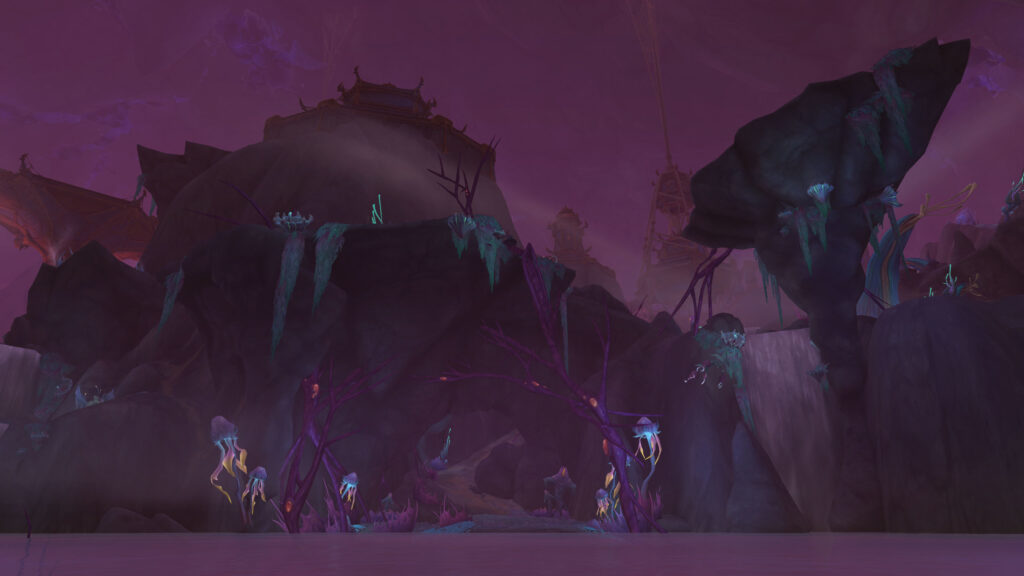
By manipulating color, texture, and contrast, designers create emotional context without words—teaching players to feel before they even understand why.
Architecture as Cultural Expression
Each race’s architecture is a visual reflection of its history and philosophy. Dwarven stonework communicates endurance and precision, Night Elf temples evoke reverence and loss, and Forsaken cities ooze decay and defiance. Every structure becomes a cultural signature, instantly communicating identity and legacy through design language alone.
Even ruins have meaning. The cracked spires of ancient Troll ziggurats and the overgrown Titan constructs remind players that every stone has a story—a remnant of civilizations long gone yet never forgotten.
Color and Light: The Emotional Palette
Lighting is one of Blizzard’s most powerful narrative tools. The warm tones of Westfall contrast with its themes of poverty and rebellion, while the cold blues of Northrend amplify feelings of isolation and dread. In Shadowlands, ethereal hues and high-contrast lighting evoke the surreal tension between life and death.
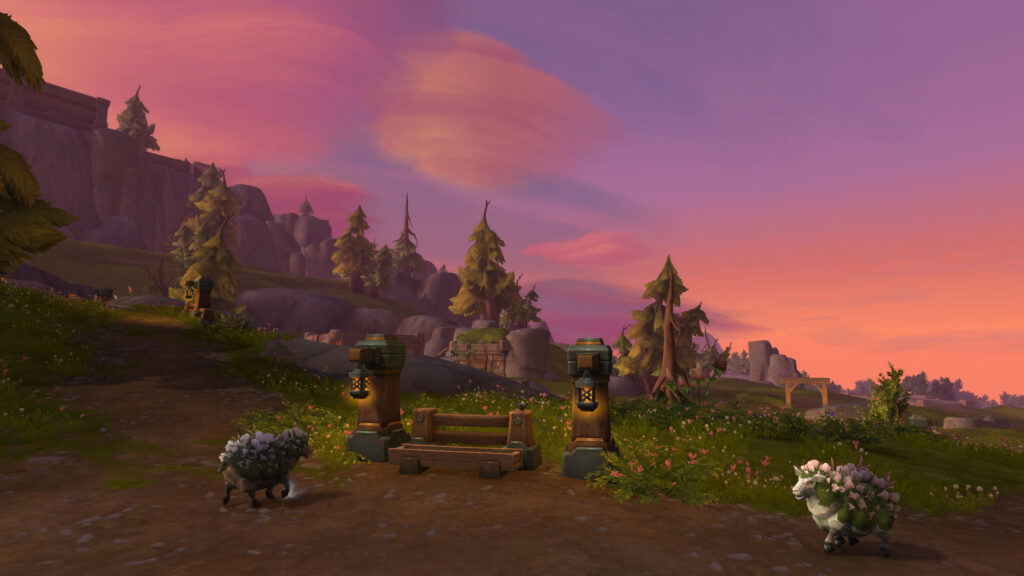
By crafting emotional palettes for each zone, Blizzard ensures that every environment resonates subconsciously, guiding player emotion long before dialogue or music enters the scene.
Environmental Storytelling Through Detail
The smallest environmental choices often tell the biggest stories. Abandoned tools hint at tragedy, broken wagons suggest conflict, and distant fires imply unseen danger. In zones like Revendreth or Suramar, Blizzard uses clutter, symmetry, and light placement to reveal social hierarchies and cultural decline without exposition.
These details transform WoW’s landscapes from static scenery into dynamic worlds where every hill and shadow carries narrative weight.
Evolution Across Expansions
From Classic’s simple biomes to Dragonflight’s breathtaking verticality, Blizzard’s zone design has evolved alongside technology and artistic ambition. Early zones relied on broad strokes—simple contrasts and landmarks—to create mood. Modern expansions use advanced lighting systems, particle effects, and environmental physics to evoke realism without losing the painterly style that defines WoW’s identity.
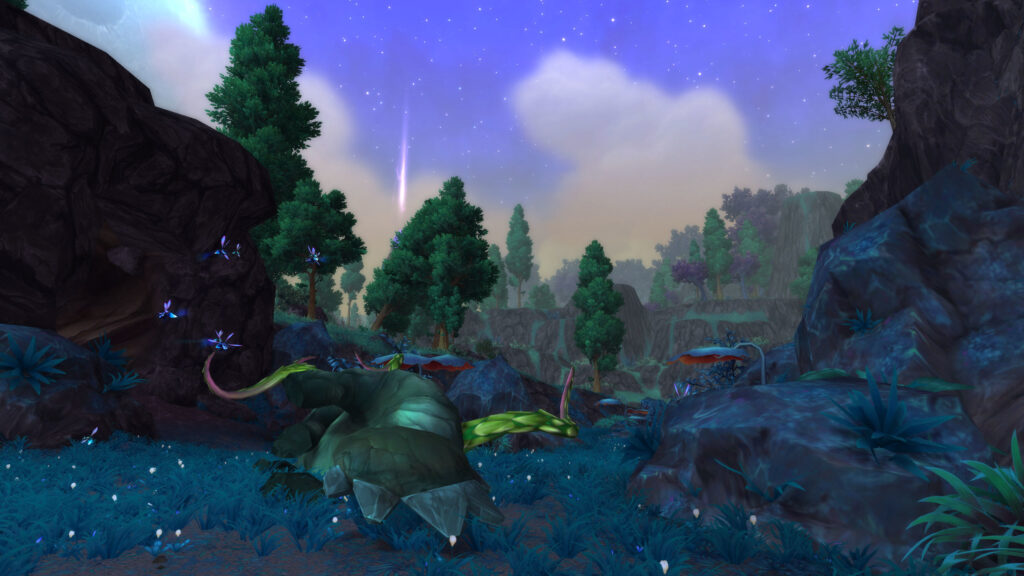
Despite these advances, the design philosophy remains consistent: every environment should feel handcrafted, meaningful, and instantly recognizable. The world may change, but its soul remains painted with the same brush.
The Silent Storytellers
Perhaps the greatest testament to Blizzard’s zone design is how many players recall their favorite zones not for quests, but for how they made them feel. The golden sunset over Nagrand, the whispering wind in Howling Fjord, the eerie stillness of Ghostlands—these are emotional memories, not mechanical ones. They prove that art and design can evoke empathy, nostalgia, and curiosity without a single word spoken.
Conclusion
Blizzard’s mastery of visual storytelling transforms Azeroth from a collection of maps into a living narrative. Every mountain range, ruin, and color gradient speaks to the history and emotion of its inhabitants.
Through art alone, players are guided, comforted, and inspired—proof that in WoW, the world itself is not just a backdrop for the story. It is the story.