
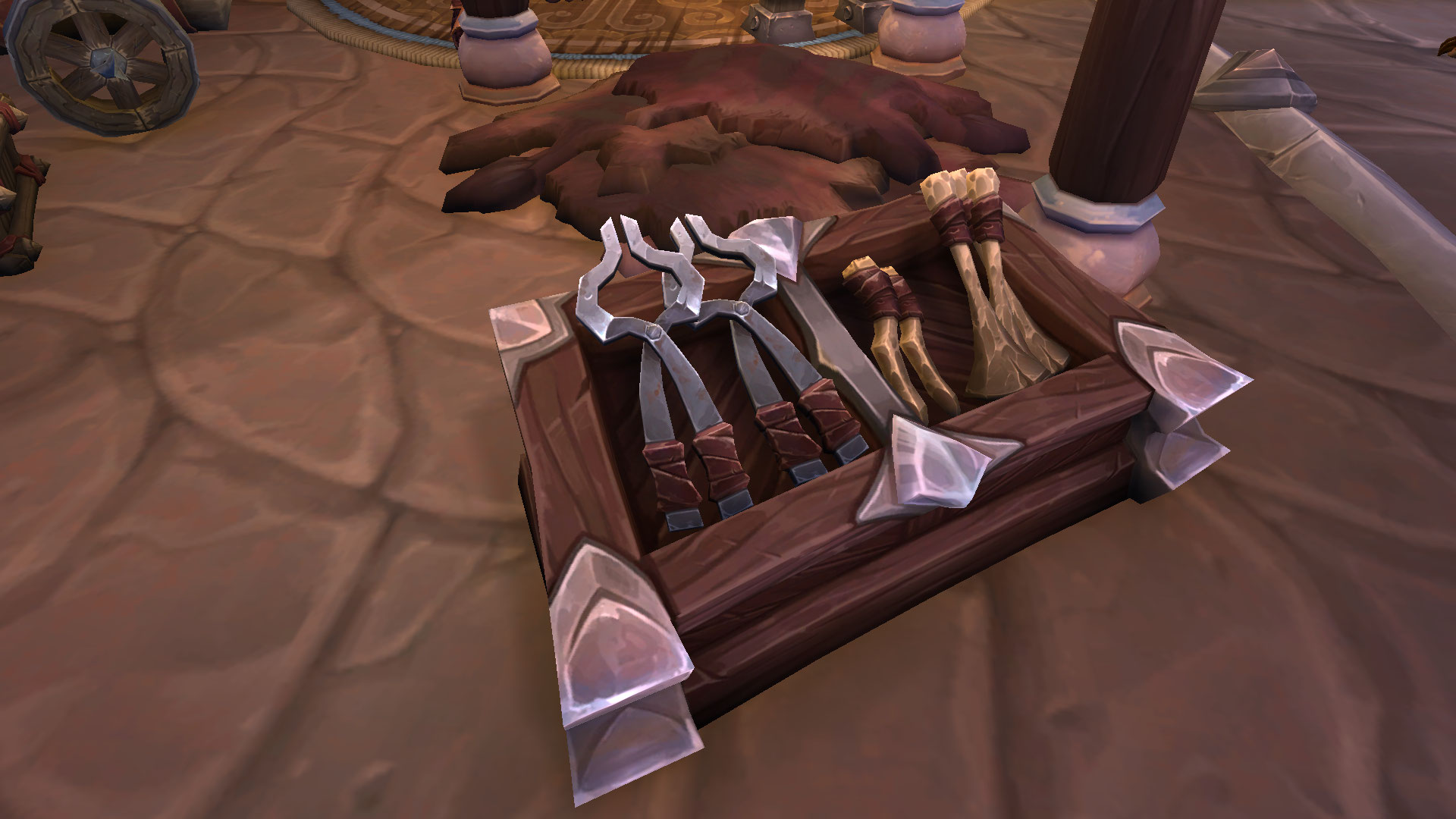
The Harandir scale armor line represents the most consequential leatherworking addition in Midnight, offering six-piece sets that bridge the gap between raid-tier and crafted gear with stat budgets that rival item level 615 drops. Each Harandir set is built around a core material called Harandir scale, harvested from the drake-type mobs roaming the Harandir territories in the Quel’Thalas revamp zone, and the stat allocation on each piece is determined by a crafting modifier system that lets leatherworkers target specific secondary stats with precision. For leatherworkers, these sets represent a weekly income potential of 3,000 to 5,000 gold depending on server economy, and for DPS and tanking classes that wear mail or leather, they provide a guaranteed path to competitive gear without relying on raid RNG. The math behind stat allocation, material costs, and set bonus effectiveness is detailed below, and every point of optimization matters when you are competing against players with full mythic raid drops.
Harandir Scale Set Compositions and Stat Budgets
There are three distinct Harandir scale sets, each designed for a specific role and built from the same base material with different crafting modifiers. The Harandir Predator set targets melee DPS with an item level of 612 and a stat budget of 1,840 total points distributed across six pieces. The Harandir Guardian set is the tanking variant at item level 614 with 1,920 stat points and a built-in stamina multiplier of 1.15 times. The Harandir Stalker set serves agility-based DPS and tanks who prefer avoidance, sitting at item level 613 with 1,880 stat points and a dodge rating baseline of 240 per full set. Each set piece contributes a fixed amount of primary stat plus a variable secondary stat pool that the leatherworker can distribute during crafting. For the Predator set, the chest piece provides 340 agility as primary stat and 180 secondary stat points that can be allocated to critical strike, haste, versatility, or armor penetration in any ratio. The flexibility means a leatherworker can customize each set for the buyer’s specific stat needs, which is why these crafted sets command premium prices over fixed-stat alternatives.
Material Requirements and Harandir Scale Farming
Crafting a complete six-piece Harandir set requires 48 Harandir scales, 12 reinforced leather strips, 6 void-touched thread spools, and 24 dense stitching wire. Harandir scales drop from the adult and elder drakes in the Harandir territories at rates of 22 percent and 34 percent respectively, with the elder drakes spawning in fixed patrol routes that take approximately eight minutes to complete. A solo farmer can expect to collect 12 to 16 scales per hour from this route, meaning a full set requires three to four hours of dedicated farming. Reinforced leather strips are crafted from thick leather at a 3 to 1 ratio, with each strip requiring 12 thick leather and one binding agent, costing 28 gold per strip at current material prices. Void-touched thread spools are a daily cooldown craft for leatherworkers at 350 skill, producing two spools per day from three voidbloom fibers and one arcane thread. The dense stitching wire is a vendor purchase at 4 gold per unit from the leatherworking supplier. The total material cost for one complete set, excluding the time value of scale farming, sits at approximately 680 gold for the Predator set, 720 gold for the Guardian set due to higher leather requirements, and 700 gold for the Stalker set.
| Set Piece | Scales Required | Primary Stat | Secondary Stat Pool | Set Bonus Contribution |
|---|---|---|---|---|
| Harandir Chestguard | 12 | 340 agility/strength/stamina | 180 points | Two-piece bonus |
| Harandir Legguards | 10 | 280 agility/strength/stamina | 150 points | Two-piece bonus |
| Harandir Shoulderpads | 8 | 220 agility/strength/stamina | 120 points | Four-piece bonus |
| Harandir Helm | 8 | 240 agility/strength/stamina | 130 points | Four-piece bonus |
| Harandir Gauntlets | 5 | 160 agility/strength/stamina | 90 points | Six-piece bonus |
| Harandir Boots | 5 | 150 agility/strength/stamina | 80 points | Six-piece bonus |
Set Bonus Mechanics and DPS Calculations
The Harandir set bonuses activate at two, four, and six pieces, and each bonus is role-specific. The Predator two-piece bonus grants 8 percent increased auto-attack damage, which for a dual-wielding rogue at 3.5 attacks per second with 2,800 average weapon damage translates to an additional 784 damage per second before any modifiers. The four-piece bonus causes critical strikes to generate two combo points instead of one, effectively doubling combo point generation on critical hits and increasing finisher frequency by approximately 18 percent. The six-piece bonus is the most impactful: it causes your finishing move to apply a 10 percent physical damage vulnerability to the target for eight seconds, stacking up to three times for a total of 30 percent increased physical damage taken. On a twenty-second burst window with three finishers, this translates to 15 seconds of 20 percent vulnerability and 5 seconds of 30 percent vulnerability, averaging 22.5 percent damage amplification for the entire window. For a rogue dealing 80,000 DPS, this bonus alone adds 18,000 DPS during burst phases, making the six-piece Predator set competitive with item level 620 raid gear.
Secondary Stat Allocation Strategy
The secondary stat pool on each Harandir piece gives leatherworkers 90 to 180 points to distribute per piece, and the allocation decision should be driven by the buyer’s existing gear and the Arpen cap. For a melee DPS character targeting 3,400 total armor penetration, the optimal allocation prioritizes Arpen on every piece until the cap is reached, then diverts remaining points to critical strike. On the Predator chest with its 180-point secondary pool, allocating 140 points to Arpen and 40 points to critical strike yields 140 Arpen and 2 percent critical strike chance. Across all six pieces, this totals 840 Arpen from secondary allocation alone, which when combined with the 320 Arpen from Voidfire gems and 1,800 from base gear, pushes the character to 2,960 Arpen, within 440 points of the effective soft cap. The remaining 200 secondary stat points across the set should go entirely to critical strike, adding approximately 10 percent critical strike chance. This allocation outperforms a balanced distribution across all four secondary stats by 6.2 percent in simulated DPS because it targets the Arpen threshold where physical damage scaling is maximized.
Market Pricing and Crafting Economics
Complete Harandir sets sell between 1,800 and 2,600 gold depending on server population, raid tier timing, and whether the set includes customized secondary stat allocation. The baseline market price for an uncustomized Predator set is approximately 2,100 gold, yielding a profit margin of 1,420 gold over the 680 gold material cost. Customized sets with pre-allocated secondary stats command a 15 to 20 percent premium because they save the buyer the cost and complexity of reforging, pushing the sell price to 2,400 to 2,520 gold. The Guardian tank set sells for slightly more at 2,300 gold base due to lower supply, as fewer leatherworkers specialize in tanking gear, while the Stalker set trades at 2,000 gold because of smaller demand from the agility DPS pool. Weekly crafting volume is constrained by the void-touched thread spool cooldown, which limits a single leatherworker to 14 spools per week, enough for approximately two complete sets. At two sets per week and an average margin of 1,500 gold per set, a dedicated leatherworking operation generates 3,000 gold weekly from Harandir sets alone, with additional income from selling individual pieces to players who only need one or two slots.
Comparison to Raid-Dropped Gear and Progression Viability
The critical question for any raider considering Harandir sets is whether they remain viable through mythic progression, and the answer depends on your raid’s clear speed and loot distribution. A full six-piece Harandir Predator set at item level 612 provides approximately 85 percent of the stat budget of a full Voidspire mythic set at item level 625, meaning the DPS gap is roughly 8 to 12 percent depending on encounter mechanics.
- Harandir Predator vs Voidspire mythic: 8 to 12 percent DPS deficit, negligible through boss four
- Harandir Guardian vs Voidspire mythic: 5 percent effective health deficit, viable on all encounters
- Harandir Stalker vs Voidspire mythic: 9 percent DPS deficit, avoidance stats partially close the gap
- Heroic raid equivalence: Harandir sets match heroic drops within 2 to 3 percent across all three variants
- Cost per point of DPS: 4.2 gold per DPS for Harandir versus 8.7 gold per DPS for raid-purchased gear upgrades
This gap is small enough that a raider with full Harandir gear will not be the limiting factor on any boss except the final two encounters, where the 12 percent deficit becomes measurable on tight enrage timers. For heroic-level raiding, the Harandir sets are essentially equivalent to full heroic raid drops, making them a complete endgame solution for players who cannot commit to mythic raiding schedules. The tank-oriented Guardian set performs even better relative to raid drops because its 1.15 stamina multiplier and built-in dodge rating compensate for the lower item level, resulting in effective health pools that are within 5 percent of mythic tank gear. Leatherworkers should market Harandir sets as progression gear for heroic raiders and off-spec gear for mythic players, which covers the broadest addressable market.